PROSPER II
Completed in 2026
Country
India
Background issues
Globally, an estimated 1.8 billion people have presbyopia, an age-related decline in the ability of the eye to focus clearly at near distances, and 826 million of them have near-vision impairment because they lack adequate vision correction. Presbyopia commonly becomes functionally apparent by age 40 and is essentially complete by 55, meaning it is most common at the height of the working years. PROSPER II was designed to test whether providing reading glasses could deliver productivity gains in the textile and garment sector, which employs tens of millions of people, predominantly women, across South and Southeast Asia.
Trial design
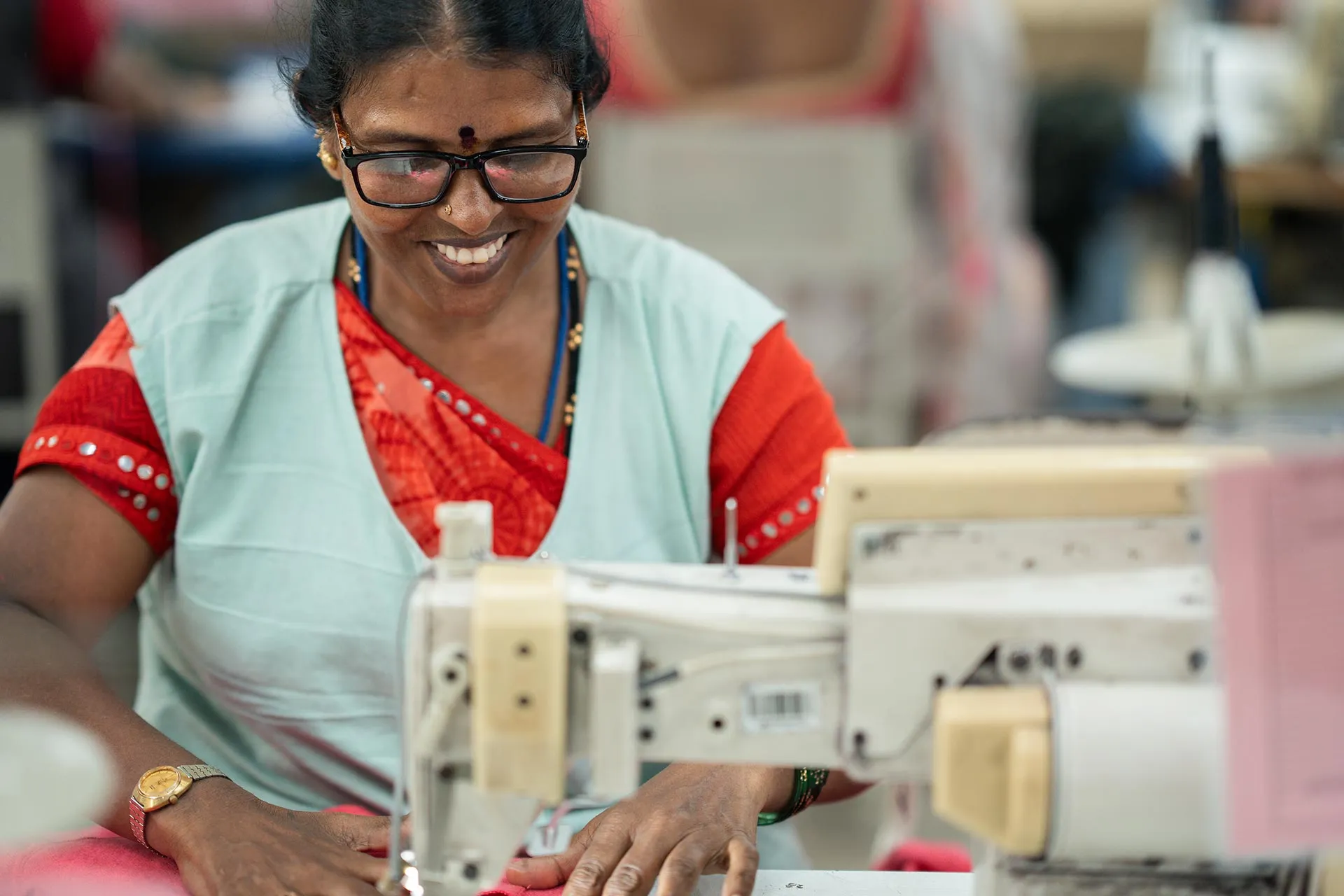
PROSPER II (PROductivity Study of Presbyopia Elimination in gaRment workers) was an individually randomised, investigator-masked controlled trial evaluating whether providing glasses to garment workers in India would increase workplace productivity. The trial enrolled 682 consenting adults aged 35 or older with uncorrected presbyopia, working in factories owned by Shahi Exports, India’s largest apparel manufacturer. Participants were randomly assigned to an intervention group (344), who received near vision glasses at the start of the trial, or to a control group (338), who received identical glasses at the end if needed. The study was implemented in the field by VisionSpring and Good Business Lab, with academic leadership from Queen’s University Belfast, the University of Michigan, and the University of California San Diego.
Outcomes
The trial found that correcting near vision with glasses boosted worker productivity by 5.7 per cent, with fewer errors and more garments completed. One in four sewing machine operators (27 per cent) had uncorrected near vision impairment at baseline. The intervention cost under USD $10 per worker and returned USD $3.37 for every USD $1 spent over the three-month trial, a 337 per cent return on investment. Scaled across the global garment workforce, the productivity gain would translate into around USD $27 billion in additional annual output. The findings were published in the British Journal of Ophthalmology. Shahi Exports found the intervention so effective that it has committed to roll it out across all its factories, offering vision screening and correction to more than 100,000 workers. PROSPER II is the first randomised controlled trial to demonstrate the impact of vision correction in a real factory setting.
Timeline
Peer-reviewed findings were published in 2026
ClinicalTrials.gov Identifier: NCT04629820